
Facebook
Twitter
Linkedin
Youtube
Instagram

A Heart Healthy Diet Helps You – Both in School and During Your Career
Nursing school is time-consuming and can be challenging and stressful. Remember to take care of your heart while you are learning to care for others hearts as well.
February is American Heart Month, which is a great time to start thinking about the long-term health of your heart. A poor diet has been shown to be an important risk factor in the diagnosis of many heart diseases, as well as obesity, high blood pressure and diabetes. Many students and nurses struggle with maintaining a healthy diet. If you make the effort and integrate heart-healthy eating into your life now, you’ll set a foundation for a long and healthy career. And, you may be able to apply your new-found knowledge to help improve your patients’ lives as well.
According to the WebMD.com, to get the full benefits of a heart-healthy diet you should:
Eat fruits and vegetables every day. Dark green, deep orange, and yellow fruits and vegetables are especially nutritious. Examples include spinach, carrots, peaches, and berries.
Eat a variety of grain products every day. Include whole-grain foods that have lots of fiber and nutrients. Examples of whole grains include oats, whole wheat bread, and brown rice.
Eat fish at least 2 times each week. Oily fish, which contain omega-3 fatty acids, are best for your heart. These fish include salmon, mackerel, lake trout, herring, and sardines.
Choose healthy fats. Unsaturated fats, such as olive, canola, corn, and sunflower oils, are part of a healthy diet. But all fats are high in calories, so watch your serving sizes.
Limit sodium. For good health, less is best. This is especially important for people who are at risk for or already have high blood pressure.
Eat only as many calories as you need to stay at a healthy weight. Visit https://caloriecontrol.org/healthy-weight-tool-kit/assessment-calculator/ to find out how many calories you should be consuming to maintain a healthy weight .
Limit added sugar. Limit drinks and foods with added sugar.
*Did you know that in one 12oz can of Caffeine-free Coke there are 39 grams of sugar. This is more than 10 grams over the amount recommended for a normal weight adult.
Drink more water. Visit https://www.slenderkitchen.com/article/how-to-calculate-how-much-water-you-should-drink-a-day to find out how much water you should be drinking for your body type.
You only have one heart. Remember to take care of it in the hustle and bustle of nursing school and everyday life. Fuel your body with healthy options and lifestyle choices that will allow you to pursue your career for years to come.
Tampa Bay Campus Announces New 3-Year Bachelor of Science in Nursing Degree and New State of the Art Campus
Galen College of Nursing announced today exciting growth with a new nursing degree program and a brand new campus location coming summer of 2018. Offering solely nursing education, Galen is focused on supporting the nursing profession through excellence in education.
Galen’s new 3-Year BSN program supports the rising industry demand for the BSN. “We created an innovative and quality program that will allow students to get into the healthcare workplace with a BSN in a shortened timeframe,” said Dean Michele Godwin. “This new 3-year BSN enhances our pre-licensure nursing pathways so we can educate more students for entry into professional nursing practice and help meet the needs of our partners in healthcare. It is a natural progression to an already quality program offering with outcomes that are among the best in the country. We are excited to be taking applications now for our first class start on July 2.”
Additionally, the need to expand the school’s infrastructure to accommodate its growing student population and program offerings was identified. The new campus will strengthen the environment that will support its students, with modern facilities and advanced technology. “As one of the largest educators of nurses in the country, we are committed to providing our students not only with a great education but with a great learning space. We want to make sure we are firmly positioned to meet the needs of our students and the community we serve,” said Rob Wolf, Campus President.
After being in the community for over 25 years, Galen is building one of the largest, dedicated nursing education campuses in Southwest Florida. This new, state of the art nursing education facility will feature an Advanced Simulation Hospital with specialized areas for maternity, aging care and medical/surgical, and has been designed around the needs of today’s student, through a thoughtful blend of collaboration, gathering and study spaces. This new campus will be a symbol of the quality education Galen offers and a gesture of caring commitment to an ever-expanding student body. It is conveniently located in close proximity to the existing campus in what was the Dex Media building at 10200 9th Street N., where renovation is currently underway, to be ready summer of 2018.
“Our mission is about expanding opportunity in nursing, and by offering more options to become an RN, with more capacity to do so, we not only support local workforce development in the Tampa Bay area but a diverse population of students with multiple lifestyles and learning needs,” said Wolf. “We couldn’t be more excited.”
Founded over 25 years ago, Galen College of Nursing is one of the largest private nursing schools in the United States. With a focus solely on nursing education, the College offers practical/vocational nursing (PN/VN), associate and baccalaureate degree nursing programs to over 5,000 students on its campuses in Louisville and Hazard, Ky., San Antonio, Texas, Tampa Bay, Fla., Cincinnati, Ohio, along with an Online Campus. Galen is accredited by the Southern Association of Colleges and Schools Commission on Colleges to award associate and baccalaureate degrees.

Nursing – America’s Most Trusted Profession
If you’re currently serving as a nurse – or are considering becoming one – you should be proud. It’s the country’s most trusted profession. Again.
According to a recently released Gallup poll, Americans rated nurses highest in honesty and ethical standards for the 16th consecutive year. Nurses topped 22 other occupations, with 82% of Americans describing nurses’ ethics as “very high” or “high.”
Nurses scored about 11% higher than the nearest profession, which were military officers. Rounding out the top five most trusted occupations were grade school teachers, medical doctors, and pharmacists.
You’ll notice that three of the professions rated highest for honesty and ethical standards are in the healthcare field – nurses, medical doctors, and pharmacists.
Nurses have rated highest every year but one since 1999. In 2001, Gallup included firefighters on the list after the 9/11 terrorist attacks, and 90% of the public rated their honesty and ethical standards as “high” or “very high.”
Galen College is Dedicated to Keeping Nurses at the Top
At Galen College of Nursing, excellence and compassionate values are among our utmost goals. When a student graduates from our college, it’s important that they not only have strong skills to excel at nursing but that they also possess the strongest ethical standards to continue America’s high perception in our profession. That’s Pure Nursing.
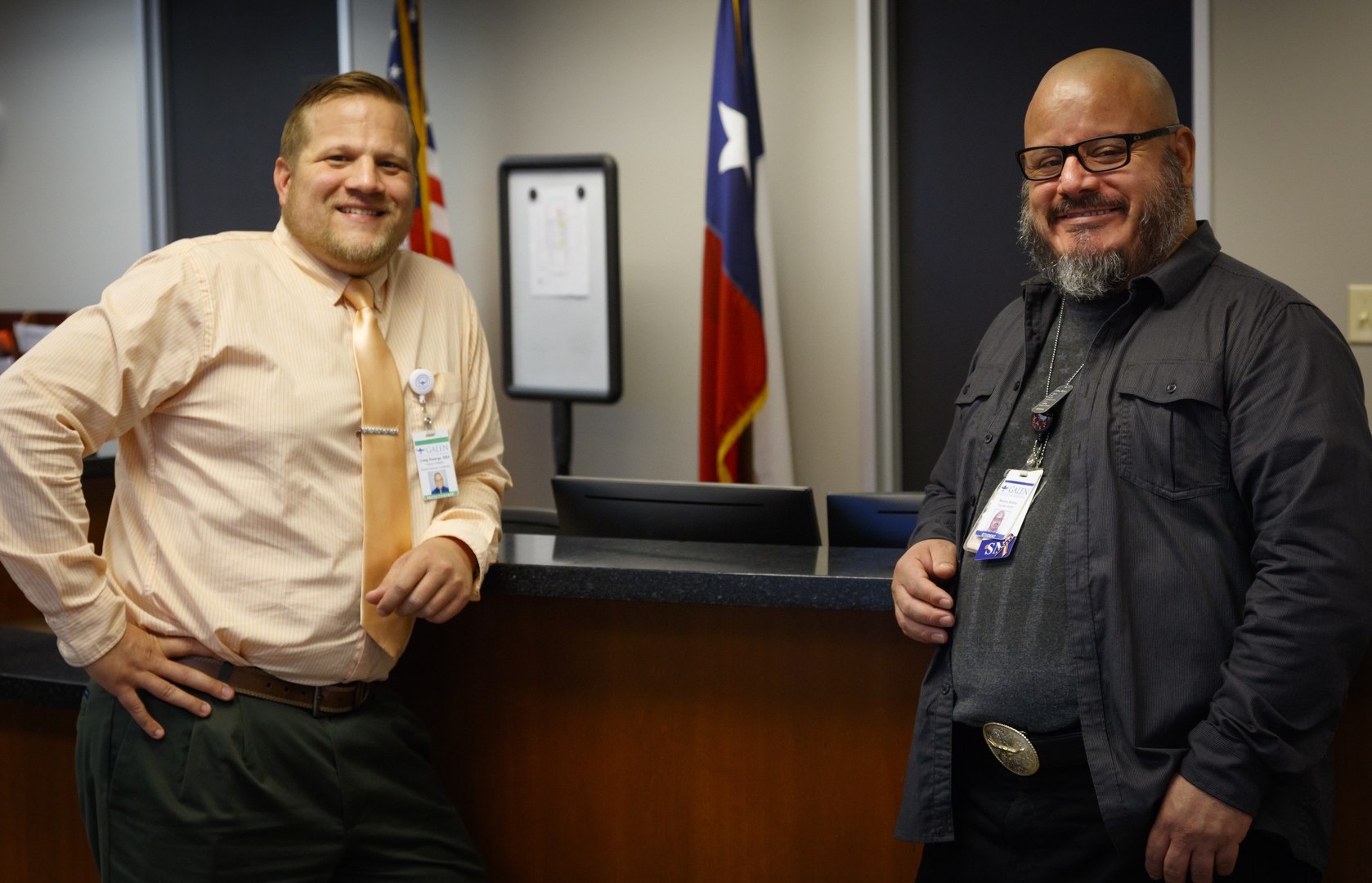
Veterans in Nursing
How Military Veteran Mauricio Alvarez found his ideal civilian career path.
After dedicating nearly nine years to military service, Mauricio Alvarez found support, camaraderie, and a great civilian career path at Galen College of Nursing. He talked with us recently about his journey.
“When I was a young boy in Mexico, I always wanted to join the Army, but my father didn’t let me do it. He preferred for me to go to school, so that is what I did. I earned an accounting technician diploma and went to work in a mine as a payroll clerk. Two years later, I emigrated to the United States. After four years of working odd jobs from dishwasher to roofing and construction, I longed for life as a soldier. So I talked to an Army Recruiter.”
The recruiter told Mauricio to earn his GED and become more proficient in English. So he attended San Antonio College, studying English as a second language and taking GED classes. In November 2007, he earned his GED.
“I found out from the second Army Recruiter I talked with that I didn’t need my GED since I already had my high school equivalent from my home country. But after all the processing, tests and immunizations, on January 7, 2007, I was shipped out for basic training. I served for 8 years, 9 months, 23 days and a few hours as a U.S. Army Soldier.”
Mauricio’s military experience was excellent preparation for a career in nursing.
“My first duty station was at Fort Hood, Texas, as a 92A Automated Logistical Supply Specialist. For the next four years, I trained as a combat lifesaver and was part of QRF [Quick Reaction Force]. I liked being part of the medical personnel taking care of soldiers. When my re-enlistment was up, I was offered a change of MOS [Military Occupational Specialty] and was qualified for 91B Combat Medic. I was stationed at Fort Sam Houston for AIT [Advanced Initial Training]. I graduated as a Combat Medic and Emergency Medical Technician. I spent the last five years as a combat medic.
“After my military service ended, and to fulfill my mother’s wishes for me to become a civilian again, I worked at Brooke Army Medical Hospital in San Antonio. I liked taking care of people and felt the satisfaction of making somebody else’s life better by fulfilling their medical needs. I started in a nursing school in Austin, but when my mother passed away, I returned to Mexico for her burial, and spent about six months there. I lost that chance to become a nurse.”
We asked Mauricio what makes veterans ideal candidates to become nurses.
“My skills and experiences as a soldier and combat medic will impact my nursing career by forging the discipline to follow nursing policies and protocols by the book, and by developing a strong desire to find and/or perfect new ways to provide medical care, leadership and management.”
“The clinical training veterans receive and experiences they acquire while serving as combat medics permit us to perform an extensive range of services. For example, we get experience in primary care by working at the troop clinic, experience in emergency and urgent care by having worked at the ER, troop clinic, and field clinic, plus quarterly disaster relief training while in service and public health. As combat medic veterans, we have gone through rigorous training exercises and work evaluation that follows performance measurement based on competency. Many combat medics earn the Expert Field Medical Badge in time of peace and Combat Medical Badge in time of war.”
Here’s what Mauricio said when asked why he chose Galen over other nursing schools.
“I was advised by my VA counselor that Galen had no waiting list like community colleges and universities did. Galen starts classes four times a year, so you can start just about anytime you’re ready. And if you’re just getting out of the military, there’s a time you can start shortly after your dismissal.”
Mauricio credits Galen College of Nursing with helping him transition from military service to a civilian career track. We have no doubt that he has a rewarding future in nursing.
“Galen College of Nursing has helped me personally to become part of something bigger than myself and to have structure, purpose and the will to achieve my goals to become a Registered Nurse and beyond.”
“While in the service, we veterans were part of something bigger than ourselves. It is understandable that when we get out of the service and into the civilian world, some of us feel lost and don’t know what to do next. Galen College of Nursing has helped me personally to become part of something bigger than myself and to have structure, purpose and the will to achieve my goals to become a Registered Nurse and beyond.
“Galen instructors and staff are very helpful. I felt very welcome in this college. I graduated in October 2016 in Vocational Nursing (VN). I know that I will succeed and earn my Associate Degree in Nursing next year. As a nurse, I plan to work for the Veterans Administration Hospital, Brooke Army Medical Hospital, or other major hospital in the city.”
Galen College of Nursing could be the right choice for you, too.
Futuristic Simulation Labs Help Students Prepare for Real-Life Patient Care
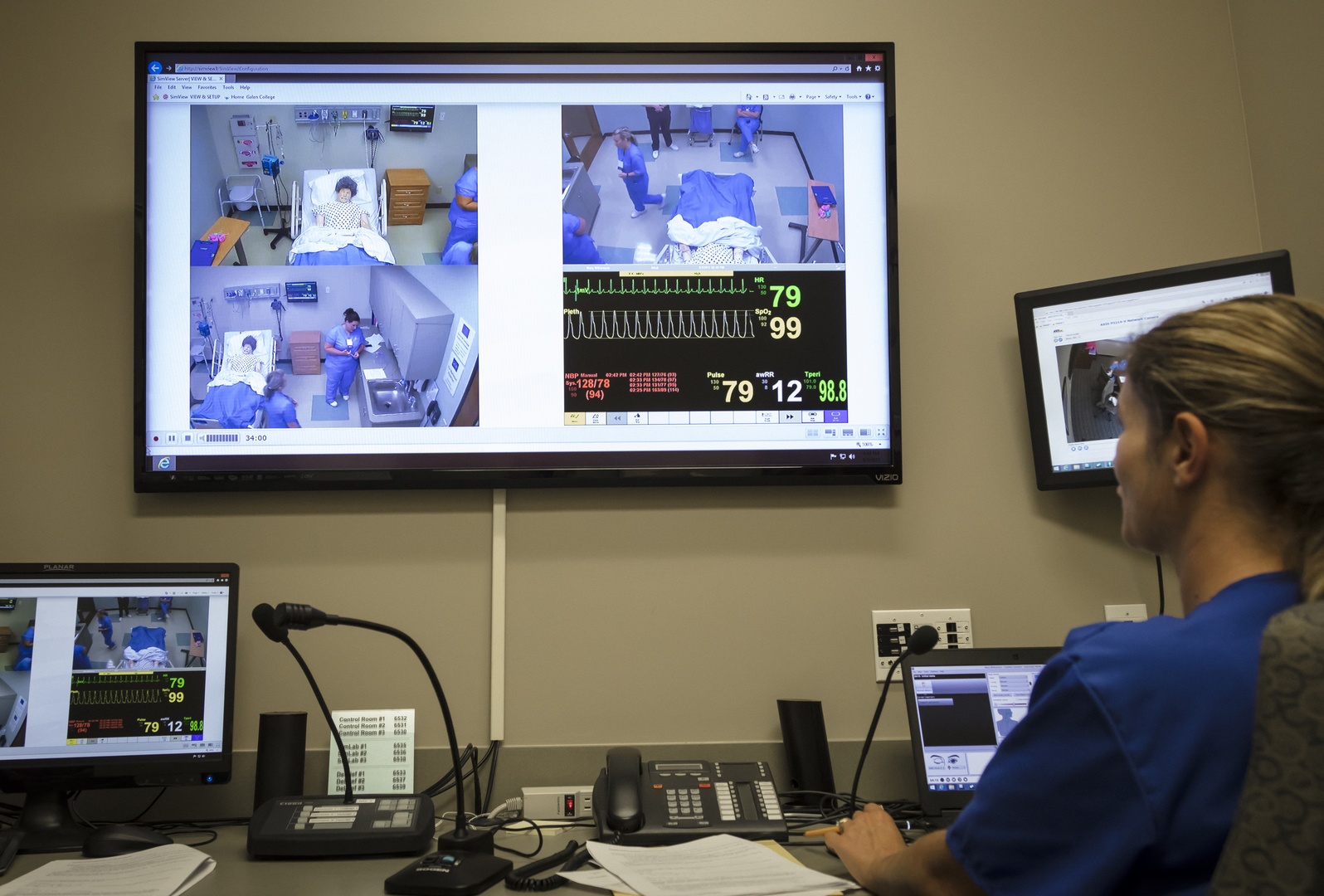
Gaining the skills and confidence a nurse needs to work with patients requires a lot of hands-on experience. But you can’t start out practicing complicated procedures on actual patients in distress. So Galen College of Nursing has made a major investment in advanced technology in their simulation labs. These sim labs provide the most realistic way for students to safely practice the medical procedures they will someday perform on actual patients. The labs are now available to students at the Louisville, San Antonio, and Tampa Bay campuses.
Galen students get a head start.
These sim labs give Galen students a jump on hands-on clinical learning. In fact, depending on the program, some students start simulation training as early as the first quarter. That’s much sooner than in most other institutions. The types of procedures practiced in the lab correlate with the subjects the students are learning in class.
These aren’t your mother’s sim labs.
As Patrick Caufield, Simulation Technician at the Louisville campus explained, “With advances in computers, batteries, and wireless technology, what used to be a static, lifeless mannequin now has vital signs like heart rate and blood pressure. It can breathe, blink, sweat, convulse, give birth, bleed, cry and more. Battery and wireless improvements also allow us to untether the mannequin from the bed and place it in a chair, hallway, a car, or even move it around from location to location during a simulation.”
Who are the patients?
Students get to work with infant, child, and adult male and female mannequins, as well as with the equipment a nurse would typically use for the patients care. Galen even has a female mannequin that gives birth in an extremely realistic fashion.
What kinds of procedures do students get to do?
Galen attempts to simulate in the labs just about anything a nurse would face on the job. Students perform patient assessments; insert feeding tubes, breathing tubes and catheters; read heart rhythms; deliver babies, set up IV lines and more. According to Caufield, a typical simulation day is between four and eight hours depending on the complexity of what is being simulated.
The simulations are incredibly realistic.
“We make every effort to make the simulation seem as real as possible,” said Caufield. “Any procedure students need to perform is done just like it is done on a person. In addition to the high-tech simulators, we also apply special effects makeup and appliances when needed. There is no “pretend there is a bruise or wound there.” If there is supposed to be a bruise or wound, then one is put on our simulator to interact with.”
To make things even more life-like, instructors can speak through the mannequin to describe symptoms or react to the students’ care. The conditions of the mannequins can also improve or deteriorate depending on the care they receive.
What happens in the lab stays in the lab.
When asked to describe a few unexpected or surprising things that happened during simulations and how students handled them, Caufield gave a response that will put future students feel at ease. “To preserve the safe, friendly learning environment of our simulations,” he said, “We don’t discuss what happens in simulation outside of simulation.”
Learning by doing.
In the scenarios, students face in these labs, they have the opportunity to learn in a hands-on way, as well as to react and solve problems in real time. Their work in these labs is an essential complement to the knowledge they gain in the classroom. It’s a great way to prepare future nurses and, equally important, to give them the confidence they need to provide excellent care for patients in the real world.
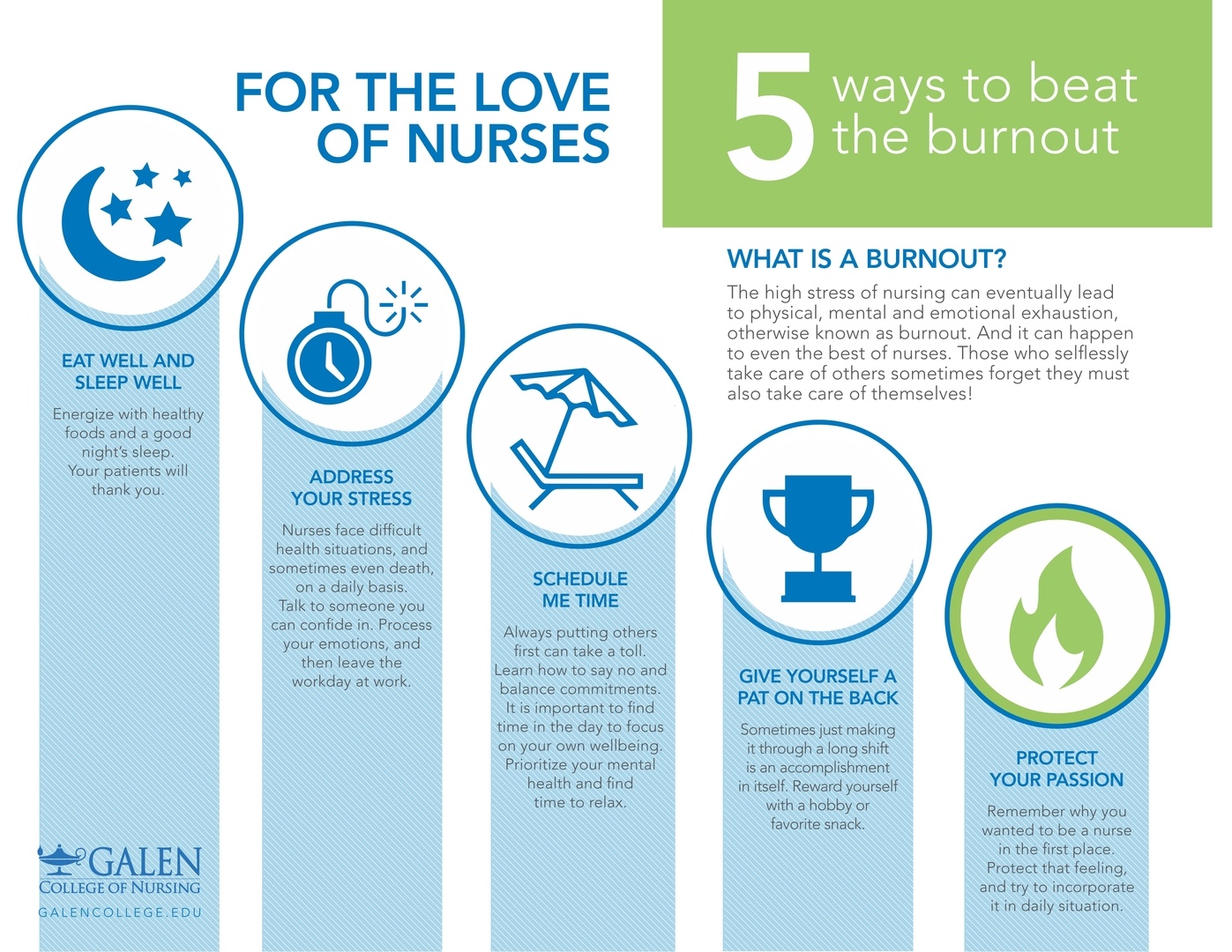
5 Ways To Beat The Burnout [Infographic]
When nursing is your career, a burnout can most definitely happen. But by following these tips and truly learning what a nursing burnout is, you can alleviate the stress and get back to loving your job.
What is Burnout?
The high stress of nursing can eventually lead to physical, mental and emotional exhaustion, otherwise known as burnout. And it can happen to even the best of nurses. Those who selflessly take care of others sometimes forget they must also take care of themselves!
- Eat Well and Sleep Well
Energize with healthy foods and a good night’s sleep. Your patients will thank you. - Address your Stress
Nurses face difficult health situations, and sometimes even death, on a daily basis. Talk to someone you can confide in. Process your emotions, and then leave the workday at work. - Schedule Me Time
Always putting others first can take a toll. Learn how to say no and balance commitments. It is important to find time in the day to focus on your own wellbeing. Prioritize your mental health and find time to relax. - Give Yourself a Pat on the Back
Sometimes just making it through a long shift is an accomplishment in itself. Reward yourself with a hobby or favorite snack. - Protect Your Passion
Remember why you wanted to be a nurse in the first place. Protect that feeling, and try to incorporate it in daily situation.
Galen College of Nursing Names Dr. Joan Frey Academic President
March 27, 2017 — Louisville, KY — Galen College of Nursing announced today that Joan Frey, EdD, MSN, BS has accepted the position of Academic President. Since 2008, Dr. Frey served as the Dean of Galen’s Louisville campus, having lead in the role of acting Academic President since May of 2016. As Galen’s Academic President, Dr. Frey will be 100% focused on developing and maintaining the critical resources necessary to continue the advancement of academic quality in support of Galen’s growing role in nursing education.
Dr. Frey brings a wealth of experience in nursing to Galen, from patient care as a staff nurse, unit manager, then Nursing Director, to her tenure in academia with 17 years at Aultman College of Nursing Joining the college as adjunct faculty, she gradually took on more responsibility, eventually becoming the nursing college Director. In her role as Director, she was instrumental in transitioning the 114-year old hospital-based education program to an accredited nursing program under the North Central Association and National League for Nursing Accrediting Commission. As Dean of the Louisville campus for 9 years, she was instrumental in building not only programmatic quality and growth but a culture of student-centered education which continues to thrive and evolve throughout the college.
Dr. Frey is also highly active in the nation’s largest nursing organization, the National League for Nursing (NLN). Since 1991, she has served in various capacities on committees ranging from public policy to finance, as well as elected positions on the NLN Board of Governors and NLN Excellence Awards Review Panel.
Her dedication to nursing and quality nursing education will be instrumental to guiding Galen’s academic present and future, as the school continues to expand access to quality nursing education and support the healthcare community across the country.
Founded over 25 years ago, Galen College of Nursing is one of the largest private nursing schools in the United States. With a focus solely on nursing education, the College offers practical/vocational nursing (PN/VN), associate and baccalaureate degree nursing programs to over 4,000 students on its campuses in Louisville, KY; San Antonio, TX; Tampa Bay, FL; Cincinnati, OH; along with an Online Campus. Galen is accredited by the Southern Association of Colleges and Schools Commission on Colleges to award associate and baccalaureate degrees. For more information about Galen College of Nursing, visit galenstaging.mystagingwebsite.com.

Galen Opens Doors to Advanced Nursing Education Facility
San Antonio, TX,– March 15, 2017 — Galen College of Nursing opened its doors to a newly expanded and renovated San Antonio campus, a 70,000-square-foot facility that features high-level clinical learning labs as well as the new Galen Simulation Hospital that includes a simulation ER, ICU and Pediatric Unit, and gives students a cutting-edge approach to nursing education.
“We are always innovating to create the absolute best learning environment for our students,” says Galen President Mark Vogt. “This expansion and renovation will better prepare our graduates for their careers in nursing.”
The U.S. is in the midst of a national nursing shortage, with an increasing healthcare demand due to an aging population and changes related to the Affordable Care Act. To address this growing need, Galen announced in January a new 3-year Bachelor of Science in Nursing program that is offered at the San Antonio campus.
“We created an innovative and quality program that will allow students to get into the healthcare workplace with a BSN in a shortened timeframe,” said Dean Tara Dailey, MSN. “This new 3-year BSN enhances our prelicensure nursing pathways, so we can educate more students for entry into professional nursing practice and help meet the needs of our partners in healthcare.”
Galen is one of the largest nursing educators in South Texas, graduating nearly 6,000 students. The expansion and renovation support Galen’s ongoing mission to expand access to quality nursing education, support the local nursing workforce and meet the healthcare needs in San Antonio.
“It’s a privilege for us to support both education and workforce development in this region,” adds Vogt.
About Galen College of Nursing
Founded over 25 years ago, Galen College of Nursing is one of the largest private nursing schools in the United States. With a focus solely on nursing education, the College offers practical/vocational nursing (PN/VN), associate and baccalaureate degree nursing programs to more than 3,000 students on its campuses in Louisville, Ky., San Antonio, Texas, Tampa Bay, Fla., Cincinnati, Ohio, Hazard, Ky., along with an Online Campus. Galen is accredited by the Southern Association of Colleges and Schools Commission on Colleges to award associate and baccalaureate degrees. For more information about Galen College of Nursing, visit galenstaging.mystagingwebsite.com.
Nursing Careers Just Keep Getting Better
Nursing holds top slots in America’s best jobs.
In the old days, when you heard “nursing can take you anywhere,” the phrase usually described a career as a military or traveling nurse.
And yes, you still can go all over the world as a nurse. But more and more of today’s nurses are changing the world without traveling, or without even working from a clinical setting. Nursing roles have expanded far beyond the clinic, the practice, or even hands-on patient care. Nowadays, a nurse can find himself or herself managing data. Teaching other nurses. Researching global disease states. Or developing public-health policy.
Indeed, I can think of very few career fields with so many paths that can lead in so many directions. Today’s nurses have more opportunities, and more ways to influence health, than ever before. Thanks to expansion, and with it, increasing specialization, nursing today offers a mix of clinical and non-clinical specialties.
In fact, Johnson & Johnson lists no fewer than 104 nursing specialties on its “Discover Nursing” website. 104 specialties – that’s amazing! Imagine the possibilities. Read on, and see what nursing can hold for you!
Impressive salaries are part of the package.
Depending on your specialty, your nursing degree can take you to a pretty healthy salary range, too. The median pay for a nurse anesthetist in 2014 was $154,000. Nurse midwives averaged around $97,000 per year, and nurse practitioners earned around $95,000.
And many of these fields will only expand from here. The Bureau of Labor Statistics expects up to 35% growth in the careers mentioned above, as well as a minimum 16% increase in general Licensed Practical/Vocational and RN jobs.
The time is ripe.
It appears that nursing is not only among America’s best careers – it’s also among those for which demand continues to rise. If you’re considering starting, or continuing, your career in nursing, there’s a lot working in your favor.

Ethics and honesty: Gallup poll ranks nurses first
The numbers are in, and nurses get the win.
Again.
In a 2015 survey asking respondents to rank 11 career fields for ethical standards and honesty, the Gallup Organization reports that nursing and nurses ranked the highest, with 80% of Americans saying that nurses have high or very high standards of honesty and ethics.
In fact, except for the 2001 survey, in which firefighters were ranked for their service on September 11, nurses have ranked at the top of this periodic survey since 1999.
Having worked as a registered professional nurse for over 40 years, my experience totally corroborates these findings. In the course of my career, I have served alongside unwaveringly honest, principled people; people committed to their passion for the highest standard of care for their patients, and quality environments for their teams. And in the course of teaching new generations of nurses, I see the future looking just as good.
It makes sense. By and large, those who are drawn to nursing aren’t ordinary people to start with. They’re people who fundamentally care for others. And they’re strong. Strong in their commitment, strong in their endurance through rigorous training, and strong in a truly demanding profession where life-and-death decisions are made daily, and outcomes are measured rigorously.
Six Traits of a Good Nurse
Along similar lines, I’d like to draw your attention to an article in last year’s Nebraska Methodist College blog that describes, in detail, the six key traits of a good nurse:
Compassion
Respect
Calm Under Pressure
Detail Orientation
Communication
Knowledge
While we can always improve ourselves in any area, especially technical skills and knowledge, many of these traits aren’t taught. They’re inherent.
The connection? I believe these traits also contribute to the “why” of ethical nurses.
It’s nurses who care for patients. And their families. We coordinate, communicate and so often, it’s our care that makes the difference. Our reward: Making a difference in people’s lives, and making the world a better place.
At Galen, we’re working to prepare the nurses of tomorrow, and to build new partnerships with healthcare providers to maintain and improve care standards for all patients today and in the future.
We hope other institutions will join us in this push. Because we all have the same goals: more, better-prepared, quality nurses for a population (including ourselves) that will desperately need them one day. If we all work together, it can happen.
I recently came across a powerful quote; “You (nursing students) are not studying for an exam. You are studying for the day when you are the only thing between the patient and the grave.” (author unknown).
So, here’s to you, nurses of yesterday, today, and tomorrow. We are good people practicing in an honorable profession and blessed to be here.
I’m grateful every day to the nurses who show up and do great things because of who they are. It makes all the difference in what we do.